

Clear communication is one of the most important features of a modern motorcycle communication system. Unlike cars, motorcycles do not have a closed cabin to block outside sounds. When riders travel at higher speeds, wind turbulence, engine vibration, exhaust noise, and traffic sounds can quickly affect communication quality.
For riders who use a motorcycle intercom during daily commuting, group rides, or long-distance touring, poor audio quality can become a serious problem. Conversations may sound unclear, navigation instructions can be difficult to hear, and riders may need to increase the volume to uncomfortable levels.
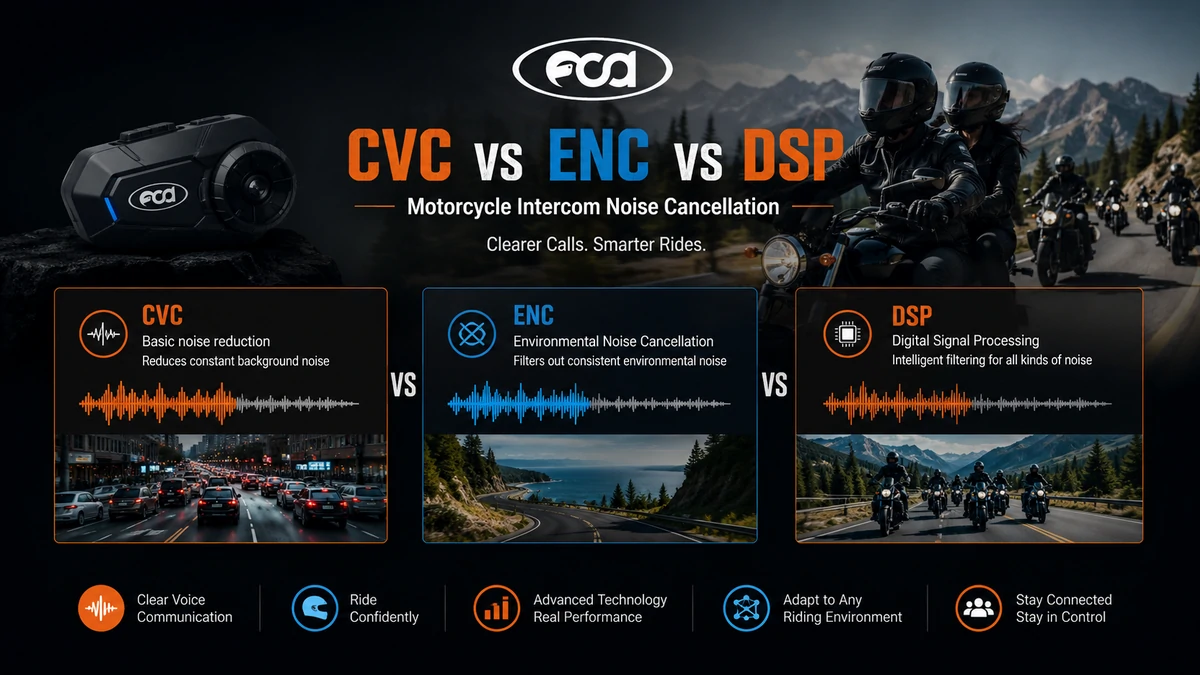
CVC vs ENC vs DSP Motorcycle Intercom Noise Cancellation
This is why modern motorcycle communication devices use different noise reduction technologies. The most common technologies include CVC, ENC, and DSP. Although these three terms are often used together, they work in different ways and solve different audio problems.
Understanding the difference between CVC vs ENC vs DSP can help riders choose a better helmet communication system that matches their riding style and environment.
🔊 What Is CVC Noise Cancellation Technology?
Table of Contents
How CVC Improves Motorcycle Communication
CVC stands for Clear Voice Capture. It is a voice processing technology originally developed for improving Bluetooth communication quality. Unlike traditional noise reduction methods that simply lower overall sound levels, CVC focuses on improving the clarity of the user's voice.
In a motorcycle intercom, CVC technology analyzes the microphone input and processes the voice signal to reduce problems such as echo, background interference, and voice distortion. This allows another rider or phone caller to hear the speaker more clearly.
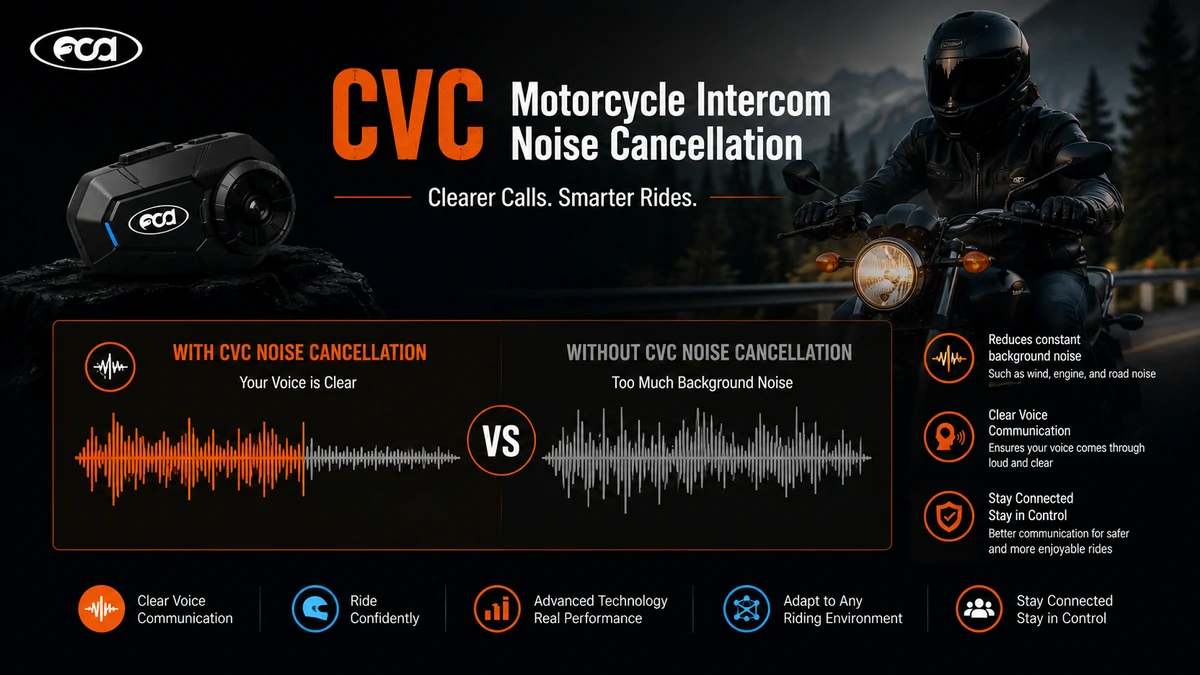
CVC Motorcycle Intercom Noise Cancellation
For everyday riders, CVC can provide a noticeable improvement, especially during lower-speed riding conditions. When communicating with a passenger, answering phone calls, or listening to navigation instructions, CVC helps create a cleaner audio experience.
Advantages and Limitations of CVC
The biggest advantage of CVC technology is that it improves voice communication without requiring complicated hardware. It works well for riders who mainly ride in cities, suburban areas, or at moderate speeds.
However, CVC has limitations when dealing with strong environmental noise. Motorcycle riding creates a unique challenge because wind noise increases dramatically as speed rises. At highway speeds, the amount of airflow around the helmet can become much stronger than normal background noise.
Because CVC mainly focuses on voice processing rather than removing external sounds, it may not provide enough protection against heavy wind noise during high-speed riding.
🎧 What Is ENC Noise Cancellation Technology?
How ENC Reduces Environmental Noise
ENC stands for Environmental Noise Cancellation. Unlike CVC, which mainly improves voice signals, ENC focuses on reducing surrounding environmental noise before it reaches the communication system.
ENC technology usually works by using multiple microphones. One microphone captures the rider’s voice, while another microphone detects surrounding sounds. The system then analyzes unwanted noise and reduces it, allowing the voice signal to become clearer.
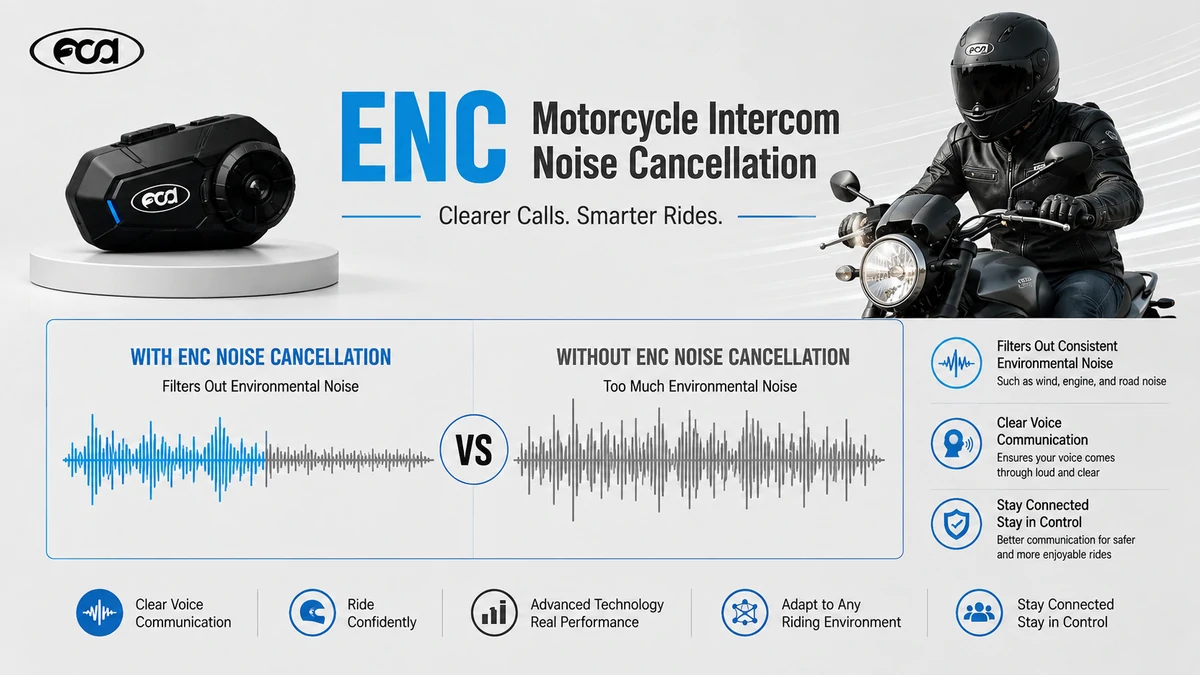
ENC Motorcycle Intercom Noise Cancellation
For motorcycle riders, ENC is especially useful because it targets common riding noises such as wind turbulence, traffic sounds, and engine vibration.
A Bluetooth Intercom with ENC technology can provide a better communication experience when riding on highways, traveling with groups, or spending several hours on the road.
Why ENC Is More Suitable for Motorcycle Riders
Motorcycle environments are much noisier than normal Bluetooth calling situations. A rider may experience constantly changing noise levels depending on speed, weather conditions, helmet type, and road surface.
ENC helps maintain clearer communication by reducing these outside sounds. This makes it easier for riders to talk with passengers, communicate with other riders, and receive voice instructions while staying focused on riding.
For riders who frequently participate in motorcycle tours or group adventures, ENC is usually a more valuable feature than basic voice enhancement technology.
⚙️ What Is DSP Noise Processing Technology?
How DSP Improves Audio Quality
DSP stands for Digital Signal Processing. It is an advanced technology that uses digital algorithms to analyze and adjust audio signals in real time.
Unlike simple noise reduction methods, DSP can process different parts of an audio signal, including voice frequency, background noise, sound balance, and distortion. This allows the system to automatically improve audio quality according to different riding environments.
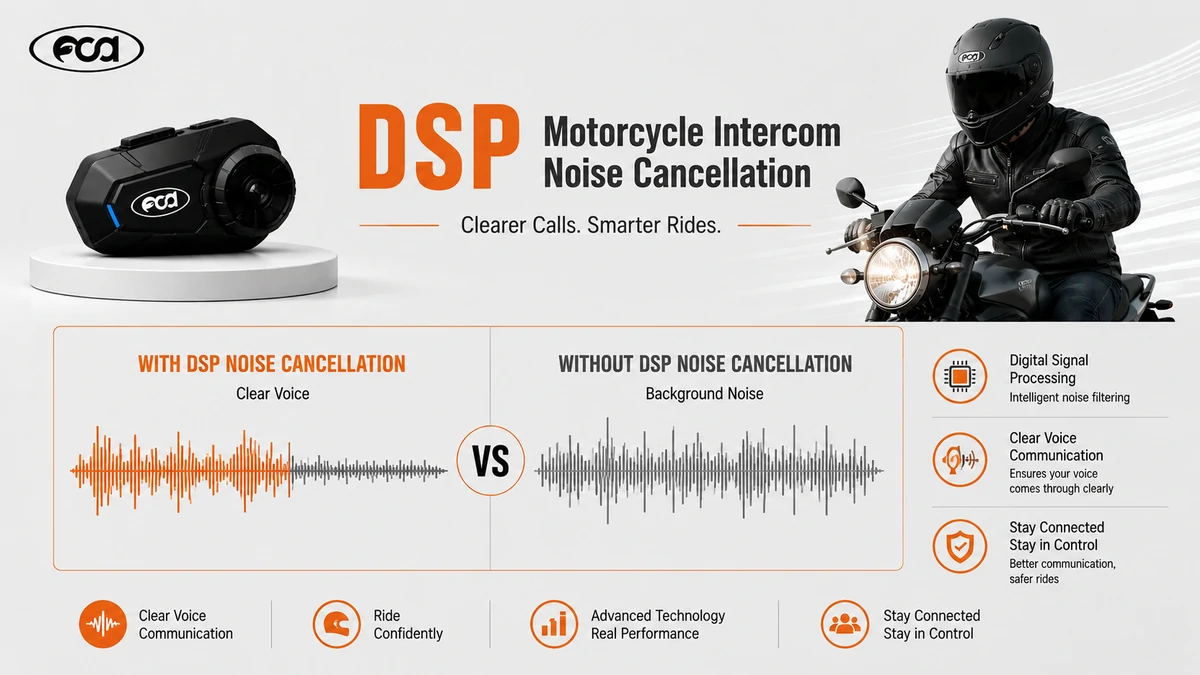
DSP Motorcycle Intercom Noise Cancellation
In a modern motorcycle communication system, DSP can help create a more natural and balanced sound experience. Instead of only reducing noise, it improves how the entire audio system performs.
DSP Compared With Traditional Noise Reduction
Traditional noise reduction often depends on physical solutions such as microphone covers, helmet design, or speaker placement. These methods are still important, but they cannot adapt quickly to changing conditions.
DSP provides software-based processing that can react to different noise patterns. For example, wind noise on an open highway is different from traffic noise in a city environment. DSP technology can analyze these changes and optimize the audio signal accordingly.
For riders who want premium communication quality, DSP combined with other technologies provides a more complete solution.
🔥 CVC vs ENC vs DSP Motorcycle Intercom Comparison
CVC, ENC, and DSP are not competing technologies where one completely replaces another. Instead, each technology focuses on a different part of the communication process.
| Technology | Main Function | Best Use Scenario |
|---|---|---|
| CVC | Improves voice clarity and reduces echo | Daily riding and basic communication |
| ENC | Reduces environmental background noise | Highway riding and group communication |
| DSP | Advanced digital audio optimization | Long-distance touring and premium audio quality |
CVC improves the voice signal, ENC reduces surrounding noise, and DSP manages overall audio processing. The best motorcycle intercom noise cancellation performance usually comes from combining multiple technologies rather than relying on only one.
🏍️ Which Noise Cancellation Technology Is Best for Motorcycle Riders?
For Daily Commuters
Riders who mainly use motorcycles for commuting usually do not need the most advanced noise processing system. Most urban riding happens at lower speeds, and the surrounding noise level is generally easier to manage.
For these riders, a motorcycle intercom with good CVC processing and quality speakers can already provide clear communication for phone calls, navigation, and passenger conversations.
For Long-Distance Touring Riders
Touring riders face a much more demanding environment. Long highway distances mean stronger wind pressure, longer communication time, and more exposure to outside noise.
For this type of rider, ENC and DSP technologies provide significant advantages. A system with advanced noise reduction can reduce fatigue and make conversations much more comfortable during long journeys.
For Group Motorcycle Riding
Group riding requires stable and clear communication between multiple riders. Riders need to share road information, discuss route changes, and stay connected during the trip.
A high-quality Motorcycle Intercom with advanced noise cancellation helps maintain clearer communication even when multiple motorcycles are traveling together at higher speeds.
🛠️ Other Factors That Affect Motorcycle Intercom Sound Quality
Microphone Installation and Position
Even the most advanced noise cancellation technology cannot perform well if the microphone is installed incorrectly.
The microphone should be positioned close to the rider’s mouth and properly protected from direct airflow. Incorrect placement can allow excessive wind noise to enter the system and reduce voice quality.
Helmet Design and Riding Environment
The helmet itself also affects communication performance. Full-face helmets generally provide better sound isolation, while open-face and modular helmets may allow more wind noise to reach the microphone.
Riders should consider helmet type, riding speed, and typical riding conditions when choosing a helmet communication system.
Speaker Quality
Noise reduction technology is only one part of the audio experience. High-quality speakers are also important because riders need clear voices, balanced sound, and enough volume without distortion.
A complete Bluetooth Intercom system should combine effective noise cancellation, good speakers, and a reliable microphone design.
📡 How to Choose the Right Motorcycle Intercom Noise Cancellation System
When choosing a motorcycle intercom, riders should not focus only on whether a device has CVC, ENC, or DSP. The best choice depends on riding habits, distance, and communication needs.
For short daily rides, basic voice processing may be enough. For frequent touring, highway riding, or group adventures, a combination of ENC and DSP provides a better experience.
Other important factors include waterproof performance, battery life, connection stability, helmet compatibility, and communication range.
A well-designed motorcycle communication system should reduce distractions, improve safety, and allow riders to enjoy conversations without constantly adjusting volume or repeating messages.
❓ Frequently Asked Questions
Is DSP better than ENC in a motorcycle intercom?
DSP and ENC solve different problems. ENC focuses on reducing environmental noise, while DSP improves overall audio processing. Many advanced systems combine both technologies for better results.
Is CVC enough for motorcycle riding?
CVC works well for normal riding conditions, especially city commuting and short trips. However, riders who often travel at highway speeds usually benefit from ENC or DSP-based noise reduction.
Does noise cancellation completely remove motorcycle wind noise?
No noise cancellation technology can completely eliminate all wind noise. Performance also depends on helmet design, microphone placement, riding speed, and installation quality.
Which noise cancellation technology is best for touring riders?
For long-distance touring, a motorcycle intercom that combines ENC and DSP generally provides the clearest communication experience because it can handle stronger and more variable riding noise.
Why is microphone quality important for motorcycle communication?
The microphone directly affects how well your voice is captured. A good microphone combined with noise reduction technology helps ensure clearer conversations between riders.
