

A motorcycle intercom can look like a simple electronic accessory, but building a profitable intercom business requires much more than finding a low factory price. A successful distributor must evaluate product quality, certifications, compatibility, margins, inventory turnover, logistics, marketing support, and after-sales service before placing the first large order.
For retailers and distributors entering the motorcycle communication market, the opportunity is worth examining. One recent market study estimates that the global motorcycle accessories market could reach $15.41 billion in 2026, with projected growth through 2032. Meanwhile, the U.S. powersports retail marketplace represents tens of billions of dollars in annual economic activity, demonstrating the scale of the broader aftermarket opportunity.
With more than 12 years of experience developing motorcycle Bluetooth communication systems since 2014, Fodsports has seen that long-term B2B success depends on building a complete supply chain—not simply buying products at the lowest possible cost.
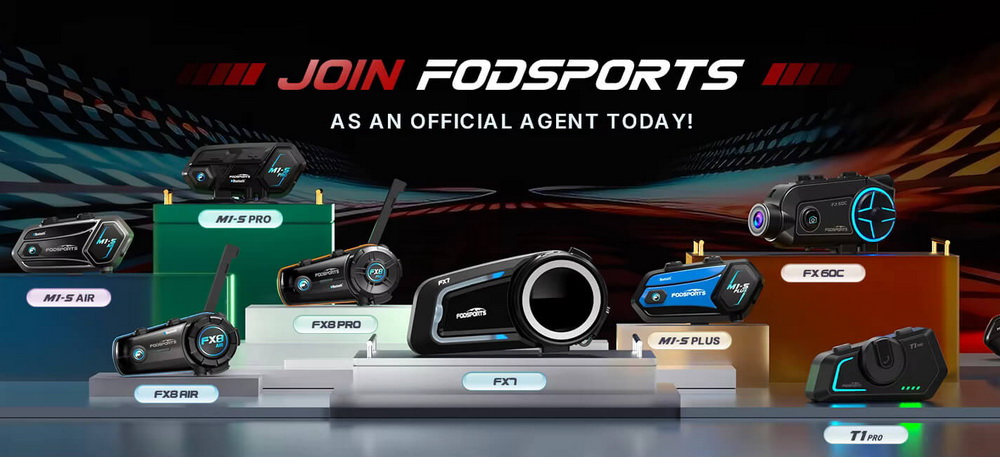
Motorcycle Intercom Distributor
🔍 Understand the Motorcycle Intercom Distribution Business
Table of Contents
From Manufacturer to End Customer
The typical motorcycle intercom supply chain can include a manufacturer, exporter or brand owner, regional distributor, dealer, online retailer, and final customer. Depending on the market, one company may perform several of these roles.
A distributor normally purchases products in larger quantities and supplies local retailers or resellers. A retailer purchases at wholesale pricing and sells directly to riders through a physical store, website, marketplace, or motorcycle community.
Understanding this structure is important because each level needs enough margin to cover marketing, storage, shipping, customer service, returns, and operating costs.
Choose Your Target Market Before Choosing Products
A common mistake is selecting products first and searching for customers afterward. A better approach is to identify your market before building inventory.
A motorcycle dealership may prefer reliable, easy-to-demonstrate products with good warranty support. An online retailer may prioritize attractive pricing, product photography, SEO content, and fast fulfillment. Motorcycle accessory wholesalers may need several price points and consistent replenishment.
Your target customer determines the right product mix, packaging, minimum order quantity, and support requirements.
🏭 How to Choose a Motorcycle Intercom Supplier
Evaluate More Than Factory Price
Wholesale price is important, but it should not be the only purchasing criterion. A $30 product that creates frequent returns can be less profitable than a $40 product with better reliability and customer support.
Before selecting a motorcycle intercom supplier, evaluate communication range, Bluetooth technology, speaker quality, microphone performance, battery capacity, waterproofing, firmware support, compatibility, accessories, packaging, and warranty terms.
Ask suppliers whether they manufacture products themselves or operate mainly as trading companies. Direct manufacturing capability can provide better control over product development, quality control, production schedules, and customization.
Check Certifications and Compliance Documents
For Bluetooth motorcycle intercoms, market compliance is particularly important because the products contain wireless radio technology.
In the United States, the FCC states that radio-frequency devices, including Bluetooth radio devices, must comply with applicable equipment authorization requirements before they can be marketed or operated under the relevant rules.
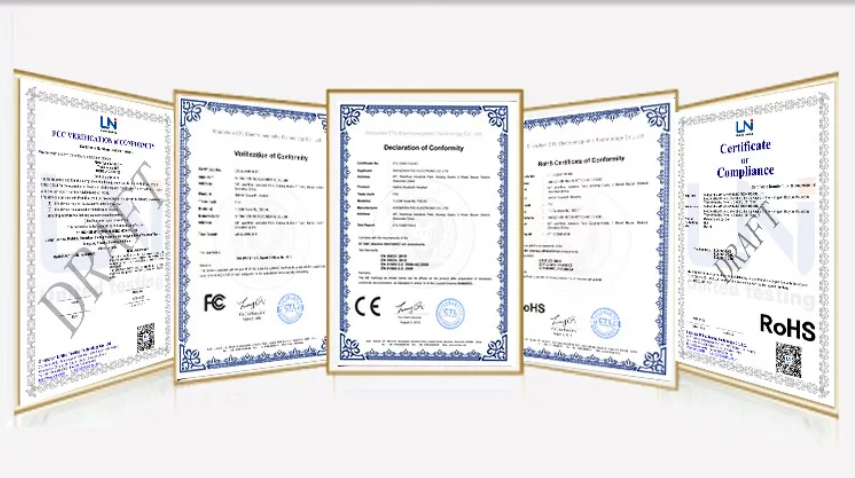
For European distribution, suppliers should be able to provide appropriate conformity documentation for the specific product and market. Do not accept a simple “CE” or “FCC” statement without asking for supporting documentation.
A professional supplier should be able to explain which certifications apply, which model numbers they cover, and whether the documentation matches the actual production version.
📦 Build the Right Wholesale Product Portfolio
Avoid Starting With Too Many Models
New distributors often make the mistake of ordering too many different products. This creates fragmented inventory and makes marketing more difficult.
A better approach is to establish a small portfolio covering different customer needs. For example, you might offer an entry-level motorcycle Bluetooth intercom, a mid-range product for everyday riders, and a higher-specification option for group touring.
This structure gives retailers clear upgrade paths without forcing them to manage excessive SKUs.
Accessories Can Increase Retail Value
Intercom accessories can also create additional sales opportunities. Replacement microphones, speakers, mounting systems, charging cables, and other compatible components can generate repeat purchases while improving the customer experience.
For retailers, the combination of a core intercom product and useful accessories can increase average order value without requiring customers to purchase another motorcycle electronics product.
💰 Calculate Distributor and Retail Margins
Look Beyond the Wholesale Price
Your actual product cost includes much more than the supplier's quotation.
A practical landed-cost calculation should consider:
Product cost + international freight + customs and duties + local transportation + warehousing + payment fees + marketing + expected returns = real landed cost.
For example, if a motorcycle intercom costs $40 from the supplier but another $8 is spent on freight and import-related costs, the effective cost is already $48 before marketing and customer service.
Distributors should therefore compare suppliers based on total landed cost and expected return rate rather than factory price alone.
Build a Sustainable Retail Price
Retail pricing must leave enough room for the retailer, distributor, promotions, returns, and operating expenses.
A healthy B2B relationship is not based on offering the lowest possible price. It is based on creating enough margin for every channel partner to actively promote the product.
This is particularly important in motorcycle accessories, where retailers may need to demonstrate products, provide installation advice, answer compatibility questions, and handle warranty claims.
🚚 Inventory, Logistics and Replenishment
Start With Controlled Inventory
Your first order should test the market rather than consume your entire purchasing budget.
Monitor sales by model, customer feedback, return rates, seasonal demand, and average monthly sales. Once a product demonstrates consistent demand, establish a replenishment schedule based on actual sales data.
Fodsports' own bulk-order program illustrates why logistics and replenishment matter in B2B: the company states that in-stock orders generally ship within 24–48 hours, while international shipments can use major carriers or a customer's preferred freight forwarder.
Keep Safety Stock for Popular Products
Running out of a successful product can be almost as damaging as overstocking a slow seller. Keep reasonable safety stock for proven products, particularly before riding seasons and major motorcycle events.
At the same time, avoid building large inventories around untested models simply because the initial wholesale price is attractive.
📣 How Distributors Can Help Retailers Sell More
Provide Marketing Assets, Not Just Products
A supplier that provides product images, specifications, manuals, videos, comparison charts, and technical information can significantly reduce the workload for distributors and retailers.
For motorcycle communication products, educational content is especially valuable. Riders often want to know about Bluetooth pairing, intercom range, group communication, helmet compatibility, music sharing, waterproofing, and microphone performance before purchasing.
Distributors can turn these questions into SEO articles, product guides, comparison pages, videos, and social media content.
Focus on the Rider's Buying Problem
Instead of marketing only technical specifications, explain how the product solves a real riding problem.
A Motorcycle Intercom can be positioned around rider-to-rider communication. A Bluetooth Intercom can emphasize connection with phones and other Bluetooth devices. Helmet Communication can be presented as part of a complete communication solution for touring and group riding.
This approach helps retailers sell benefits rather than simply competing on price.
🛠️ After-Sales Service Is Part of the Product
Make Warranty Support Clear
A distributor should understand the supplier's warranty process before placing an order.
Ask how defective units are diagnosed, who pays return shipping, how replacement parts are supplied, how firmware problems are handled, and how long typical warranty cases take.
Clear procedures reduce friction between the distributor, retailer, and end customer.
Technical Support Can Become a Competitive Advantage
Motorcycle intercoms involve pairing, firmware, microphones, speakers, mobile phones, and helmet installation. Some customers will need technical assistance even when the hardware is functioning correctly.
A supplier with responsive technical support gives distributors an important advantage. Faster problem solving can reduce returns and improve retailer confidence.
📊 What the Market Data Means for Distributors
The opportunity is not limited to selling motorcycles themselves. The Motorcycle Industry Council reported 1,261,300 estimated new powersports retail sales in the U.S. in its 2025 industry impact data, alongside a $50.9 billion U.S. powersports retail marketplace.
The aftermarket also remains significant. A 2026 motorcycle accessories market study estimates the category at $15.41 billion in 2026, forecasting a 6.32% CAGR through 2032.
These figures should not be interpreted as guaranteed demand for motorcycle intercoms specifically. However, they demonstrate the scale of the broader powersports and motorcycle accessory ecosystem in which communication products compete.
🤝 What a Strong Supplier Partnership Looks Like
The best supplier relationship should develop beyond purchase orders.
A strong B2B partner can provide consistent product quality, transparent specifications, compliance documents, stable production, reasonable MOQs, dependable logistics, marketing resources, replacement parts, warranty support, and communication with the product development team.
Fodsports has focused on motorcycle Bluetooth communication technology since 2014 and operates across R&D, manufacturing, quality control, warehousing, logistics, and after-sales support. That integrated structure is designed to give distributors a more complete supply relationship rather than treating wholesale sales as a simple factory transaction.
For a distributor evaluating suppliers, the key question should therefore be: Can this supplier help me build a sustainable motorcycle communication business over several years?
🏁 Final Takeaway
Becoming a successful motorcycle intercom distributor is not simply about finding the cheapest supplier. It requires a complete B2B strategy covering product selection, compliance, landed cost, inventory, marketing, retail margins, logistics, and after-sales service.
Start with a clearly defined market, build a focused product portfolio, test demand with controlled inventory, calculate your real costs, and choose a supplier that can support you after the products arrive.
For distributors and retailers entering the motorcycle communication market, the strongest long-term advantage is not simply a low purchase price—it is a reliable supply chain and a supplier capable of growing with your business.
❓ Frequently Asked Questions
What is a motorcycle intercom distributor?
A motorcycle intercom distributor purchases communication products in wholesale quantities and supplies retailers, dealers, online sellers, or other businesses within a specific market or territory.
How do I choose the best motorcycle intercom supplier?
Compare product quality, certifications, pricing, MOQ, production capacity, warranty, technical support, logistics, accessories, and marketing resources. Do not evaluate suppliers on unit price alone.
What certifications should motorcycle Bluetooth intercoms have?
Requirements depend on the destination market and product configuration. U.S. wireless products generally need to meet applicable FCC equipment authorization requirements, while products sold in Europe need to meet applicable EU conformity requirements. Always request documentation covering the exact product.
How much inventory should a new distributor purchase?
Start with a controlled quantity that can test real market demand. Increase inventory after you have reliable sales data rather than purchasing a large number of untested models.
What makes a motorcycle intercom distributor profitable?
Profitability depends on the complete business model: landed product cost, retail pricing, sales volume, inventory turnover, return rates, marketing expenses, logistics, and after-sales costs. A reliable supplier can improve profitability by reducing operational problems and supporting consistent replenishment.
📚 Authoritative Sources and Further Reading
- Motorcycle Industry Council — U.S. Powersports Industry Economic Impact: https://www.mic.org/
- Federal Communications Commission — RF Equipment Authorization: https://www.fcc.gov/oet/ea
- European Commission — CE Marking and Product Requirements: https://single-market-economy.ec.europa.eu/single-market/ce-marking_en
- Powersports Distribution Group — Motorcycle Wholesale Distribution Industry Data: https://www.powersportsdistributiongroup.com
