

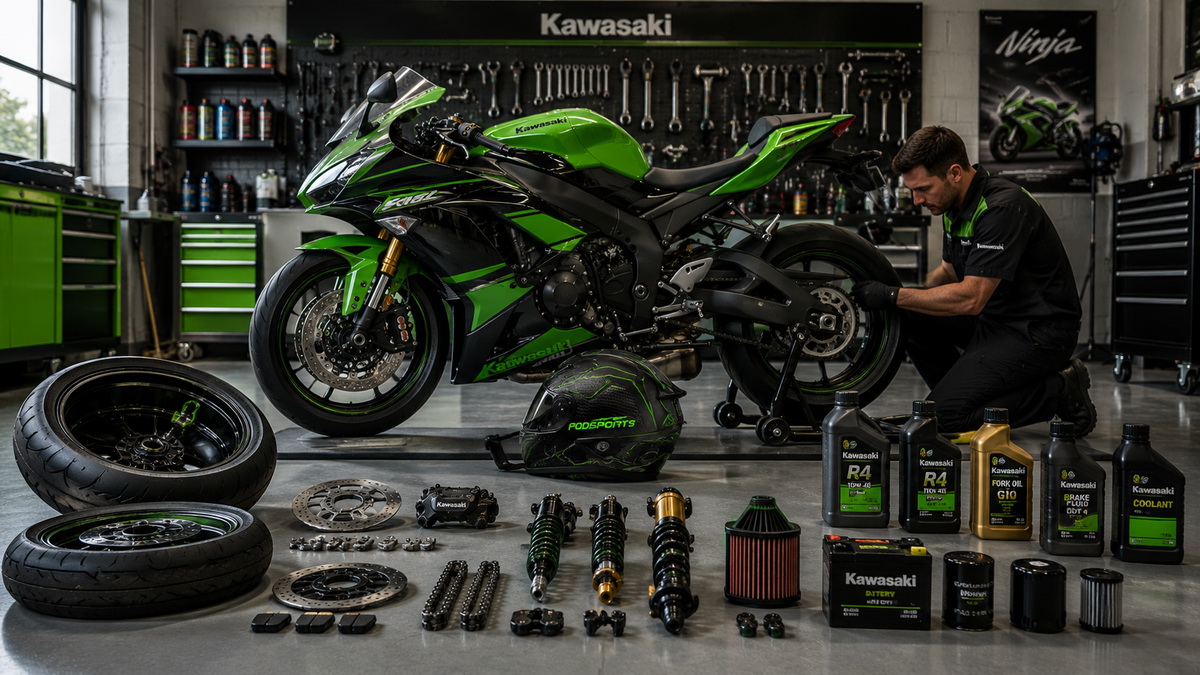
Regular motorcycle maintenance is one of the most important parts of owning a motorcycle. A well-maintained bike is safer, more reliable, easier to ride, and less likely to develop expensive mechanical problems.
Motorcycle maintenance is not limited to changing engine oil. Tires, brakes, chains, fluids, filters, battery, suspension, controls, and electrical components all need regular inspection. Some items should be checked before every ride, while others may only require attention every few thousand miles or once every few years.
The exact motorcycle maintenance schedule varies by model, so always use your owner's manual as the final reference. The intervals below are practical general guidelines rather than replacements for the manufacturer's service schedule.
Complete Motorcycle Maintenance Guide
🔍 Before Every Ride
Table of Contents
A quick inspection before riding can identify problems before they become dangerous.
Check Tires
Check tire pressure when the tires are cold and use the pressure recommended by the motorcycle manufacturer. Also inspect the tread, sidewalls, cuts, cracks, nails, and other damage.
Tire pressure should ideally be checked before every long ride and at least weekly if the motorcycle is used regularly.
Check Brakes and Controls
Test the front and rear brakes before riding. The brake lever and pedal should feel normal, without excessive softness or unusual resistance.
Check the throttle, clutch, mirrors, horn, side stand, and steering movement as well.
Check Lights and Fluids
Confirm that the headlight, brake light, turn signals, and horn work correctly. Check the engine oil level and look underneath the motorcycle for fresh oil, fuel, or coolant leaks.
A quick walk-around inspection before every ride is one of the simplest ways to improve motorcycle safety.
🛢️ Engine Oil and Filter Maintenance
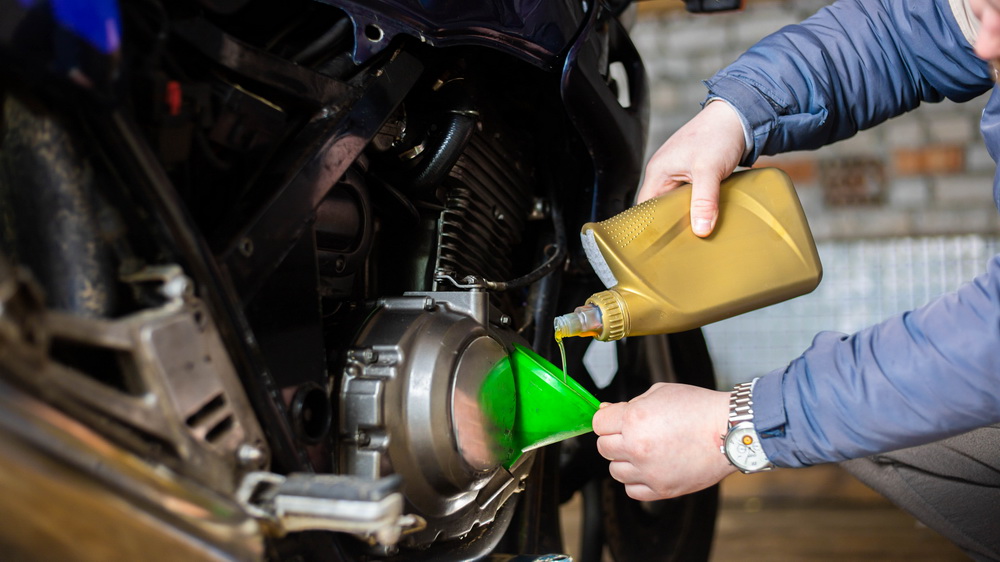
Engine oil protects internal engine components by reducing friction and helping control heat. Old or contaminated oil can reduce lubrication performance and accelerate engine wear.
Engine Oil and Filter Maintenance
How Often Should You Change Motorcycle Oil?
A common general range is approximately 3,000–6,000 miles, but some modern motorcycles have longer or shorter intervals depending on the engine and oil specification.
The oil filter is normally replaced at the same time as the engine oil.
Always use the correct oil grade and specification listed in the owner's manual.
Check Oil Level Regularly
Checking the oil level every few hundred miles or before long trips is a good habit. Some motorcycles require the engine to be warm and the motorcycle held upright for an accurate reading, while others specify a different procedure.
Follow the manufacturer's instructions rather than assuming every motorcycle uses the same method.
⛓️ Chain, Belt and Final Drive
The final-drive system requires regular attention, especially on chain-driven motorcycles.
Chain Maintenance
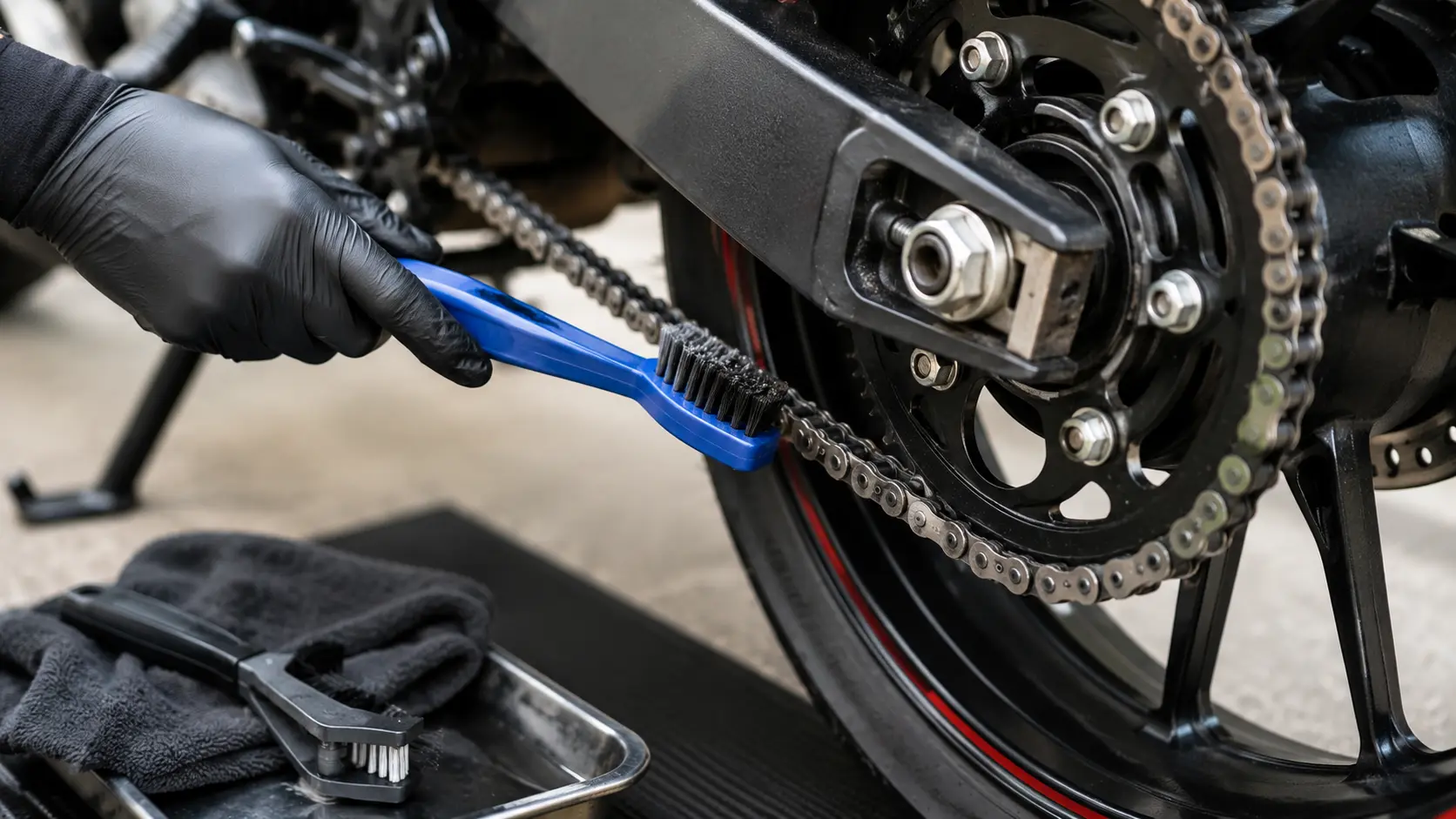
For chain-drive motorcycles, inspect chain condition and slack regularly. Clean and lubricate the chain roughly every 300–600 miles, or sooner after riding in heavy rain, mud, dust, or dirty conditions.
Chain Maintenance
Also inspect the sprockets for worn or damaged teeth.
A chain that is excessively loose, tight, rusty, or damaged should be serviced before riding.
Belt and Shaft Drive
Belt-driven motorcycles require inspection for cracks, damage, contamination, and correct tension.
Shaft-drive motorcycles have different maintenance requirements, including final-drive lubricant checks and replacement at intervals specified by the manufacturer.
Do not apply chain lubricant to belt or shaft-drive systems.
🛞 Tires and Wheels
Tires are among the most important safety components on a motorcycle.
Tire Inspection
Check tire pressure frequently and inspect for:
- Uneven tread wear
- Cuts or cracks
- Punctures
- Embedded objects
- Abnormal bulges
- Excessive tread wear
Replace tires when they reach the manufacturer's wear limit or show serious age or damage.
Wheel and Bearing Inspection
During regular service, inspect wheels, wheel bearings, spokes where applicable, and valve stems.
If you notice unusual vibration, wheel play, or changes in handling, have the motorcycle inspected before continuing to ride.
🛑 Brakes and Brake Fluid
Good brakes are essential for motorcycle safety, particularly during emergency stops.
Brake Pads and Discs
Inspect front and rear brake pads regularly. Check the thickness of the friction material and inspect brake discs for excessive wear, grooves, cracks, or other damage.
A practical approach is to inspect brake pads every 3,000–6,000 miles and whenever you notice a change in braking performance.
Brake Fluid
Check the brake-fluid level and condition periodically. Brake fluid absorbs moisture over time, so many motorcycles require replacement approximately every two years, although the manufacturer's schedule should always take priority.
A spongy brake lever or pedal, fluid leak, or sudden change in braking feel requires immediate attention.
🌡️ Coolant and Other Fluids
Liquid-cooled motorcycles require regular coolant inspection.
Coolant
Check the coolant level according to the owner's manual and inspect the system for leaks.
Coolant replacement intervals vary significantly, but a common range is around 2–3 years depending on the motorcycle and coolant specification.
Never open a hot cooling system because pressurized coolant can cause serious burns.
Other Fluids
Depending on the motorcycle, you may also need to maintain:
- Transmission oil
- Final-drive oil
- Clutch fluid
- Fork oil
- Hydraulic fluids
Not every motorcycle uses all of these fluids, so follow the service manual for your specific model.
🔧 Air Filter, Spark Plugs and Valve Clearance
Several engine components require periodic inspection or replacement.
Air Filter
A dirty air filter can restrict airflow and affect engine performance and fuel economy.
Inspect the air filter during major services, especially if you frequently ride on dusty roads. Replace or clean it according to the manufacturer's instructions.
Adventure and off-road motorcycles may require more frequent air-filter service in dusty environments.
Spark Plugs
Spark plugs should be inspected and replaced according to the motorcycle manufacturer's schedule. A common interval can range from approximately 8,000–16,000 miles, but some motorcycles use long-life plugs with substantially longer intervals.
Signs of potential spark-plug or ignition problems include difficult starting, rough idling, misfires, and poor acceleration.
Valve Clearance
Valve clearance is one of the most important major maintenance items.
Many motorcycles require valve inspection somewhere around 12,000–24,000 miles, although the interval can vary considerably between models.
Valve-clearance work can require significant disassembly and specialized knowledge, so professional service may be appropriate if you are not experienced with engine maintenance.
🔋 Battery and Electrical System
Battery
Inspect battery terminals for corrosion and make sure the battery is securely mounted.
If your motorcycle is stored for an extended period, a suitable battery maintainer can help prevent unnecessary discharge.
Battery life varies, but replacement is often needed after several years depending on climate, usage, and battery type.
Electrical Components
Periodically check:
- Headlight
- Brake light
- Turn signals
- Horn
- Starter
- Instrument display
- Fuses
- Charging system
If the motorcycle repeatedly struggles to start or the battery keeps losing charge, inspect the charging system rather than simply replacing the battery.
🏁 Suspension, Steering and Controls
Suspension
Inspect the front forks and rear shock for oil leaks, damaged seals, corrosion, or unusual behavior.
A motorcycle that feels unstable, excessively bouncy, or unusually hard to control may require suspension inspection.
Fork oil replacement intervals vary by motorcycle and riding conditions. Many manufacturers specify service at longer mileage intervals rather than every basic service.
Steering and Controls
Check the steering-head bearings for excessive play or notchy movement.
Also inspect clutch and throttle cables on cable-operated motorcycles. Make sure they move smoothly and have the correct free play.
Lubricate or adjust cables according to the manufacturer's recommendations.
📅 Complete Motorcycle Maintenance Schedule
The following schedule provides a practical general reference:
| Maintenance Item | Typical Interval |
|---|---|
| Tire pressure | Before every ride / weekly |
| Lights and controls | Before every ride |
| Engine oil level | Every few rides / before long trips |
| Chain inspection | Every few hundred miles |
| Chain cleaning and lubrication | About 300–600 miles |
| Engine oil and filter | About 3,000–6,000 miles |
| Brake pad inspection | About 3,000–6,000 miles |
| Air filter inspection | Every major service |
| Spark plugs | About 8,000–16,000+ miles |
| Valve clearance | About 12,000–24,000 miles |
| Brake fluid | Commonly around 2 years |
| Coolant | Commonly around 2–3 years |
| Fork/suspension service | Follow manufacturer schedule |
| Battery | Inspect regularly; replacement as needed |
These are general guidelines only. Manufacturer intervals can be substantially different, so the owner's manual should always take priority.
🧰 Essential Maintenance Tools and Equipment
Every motorcycle owner should have a basic maintenance kit.
Useful items include:
- Motorcycle-specific tool kit
- Torque wrench
- Tire-pressure gauge
- Tire inflator
- Chain cleaning brush
- Chain lubricant
- Motorcycle stand where appropriate
- Multimeter
- Battery charger or maintainer
- Basic cleaning supplies
A torque wrench is particularly useful because motorcycle fasteners often have specific torque requirements. Avoid guessing torque values for critical components such as brakes, wheels, axles, and suspension parts.
📡 Motorcycle Communication and Touring Equipment
Maintenance is important, but preparation also matters when taking your motorcycle on longer trips.
A reliable Helmet Communication system can provide navigation instructions and rider communication without requiring you to stop and check your phone.
A Bluetooth Intercom is particularly useful for group motorcycle trips, allowing riders to communicate about navigation, fuel stops, road hazards, and unexpected changes.
For larger groups, a Motorcycle Intercom can make communication easier and help riders stay coordinated during long-distance motorcycle touring.
Before a long trip, perform a complete inspection rather than relying only on your normal maintenance schedule.
❓ Motorcycle Maintenance FAQs
How often should I service my motorcycle?
A general rule is to perform routine service around every 3,000–6,000 miles or once a year, whichever comes first. However, the correct interval depends on the motorcycle.
How often should I lubricate my motorcycle chain?
For many chain-driven motorcycles, approximately every 300–600 miles is a reasonable general guideline. Lubricate more frequently after rain, washing, or dusty riding.
How often should motorcycle oil be changed?
Many motorcycles fall within a 3,000–6,000-mile oil-change range, but always follow the oil type and interval specified by the manufacturer.
How often should brake fluid be changed?
Many motorcycles use an approximately two-year interval, but check the owner's manual for the exact requirement.
When should motorcycle valves be checked?
Valve-clearance intervals vary widely. A common general range is approximately 12,000–24,000 miles, but the manufacturer's schedule is more important than any generic interval.
Can I do motorcycle maintenance myself?
Basic tasks such as checking tire pressure, engine oil, chain lubrication, battery inspection, and replacing some consumables can often be handled by owners with the correct tools and knowledge. More complex work such as valve adjustment, brake-system repairs, suspension service, and major engine work may be better handled by a qualified technician.
What is the most important motorcycle maintenance task?
There is no single task that replaces the others. Tires, brakes, fluids, chain or final drive, controls, and engine maintenance all matter. A consistent maintenance routine is more important than focusing on only one component.
🏍️ Keep a Maintenance Record
The easiest way to stay on top of motorcycle maintenance is to keep a simple service record.
Record the date, mileage, work performed, parts replaced, and the next recommended service. This prevents important maintenance from being forgotten and can also increase the motorcycle's resale value.
Most importantly, do not treat the intervals in this guide as a replacement for your motorcycle's official service schedule. Your owner's and service manuals contain the specifications designed specifically for your motorcycle.
Regular inspections, timely servicing, and attention to unusual noises or changes in handling can help keep your motorcycle safe, reliable, and ready for the next ride.
