

There's a moment every rider remembers: the first time you roll on the throttle, feel the engine pull, and realize — this is freedom on two wheels. Whether you're looking to slash your commute, join weekend group rides, or eventually cross countries on a touring bike, learning to ride is one of the most rewarding skills you can pick up. But here's the truth: riding isn't dangerous — unprepared riding is.
Learning how to ride a motorcycle is an exciting journey that combines freedom, skill, and adventure. Whether you dream of weekend rides, long-distance motorcycle touring, or simply commuting on two wheels, mastering the basics step by step will help you become a safer and more confident rider.
The key to becoming a skilled motorcycle rider is building correct habits from the beginning. Instead of rushing onto busy roads, beginners should focus on motorcycle control, practicing essential techniques, and understanding safe riding principles.
This step-by-step motorcycle riding guide will help new riders learn the fundamentals, avoid common mistakes, and develop the confidence needed to enjoy every ride.
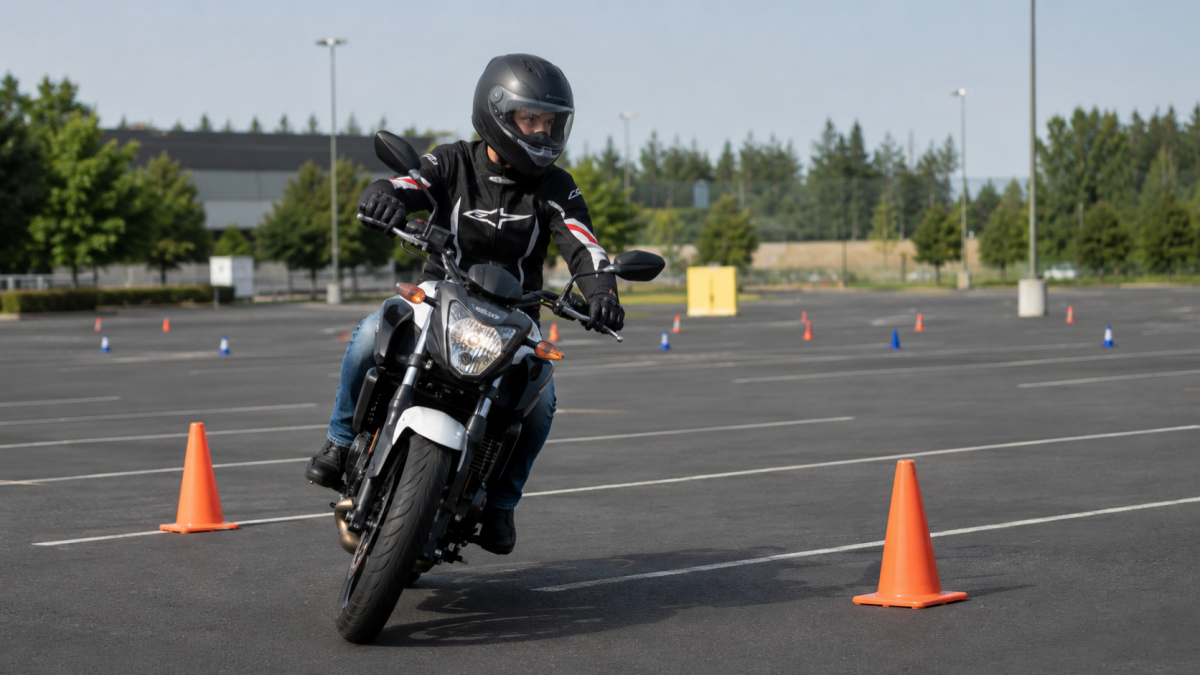
beginner-motorcycle-riding-training
🪖 Start with the Right Safety Gear
Table of Contents
Protect Yourself Before You Ride
Before learning how to ride a motorcycle, having proper safety equipment is the first step. Good riding gear not only protects you but also improves comfort and confidence while practicing.
Essential motorcycle safety gear includes:
- DOT or ECE certified helmet(Pro tip: Never buy a used helmet. The internal EPS foam compresses after one impact — even if it looks fine)
- Protective motorcycle jacket
- Riding gloves
- Motorcycle boots
- Protective riding pants
Many beginner riders focus only on learning riding skills but ignore protective equipment. Developing the habit of wearing proper gear from your first ride is one of the most important steps toward becoming a responsible rider.
⚙️ Learn the Motorcycle Controls
motorcycle-controls-guide-for-beginners
Understand Every Control Before Moving
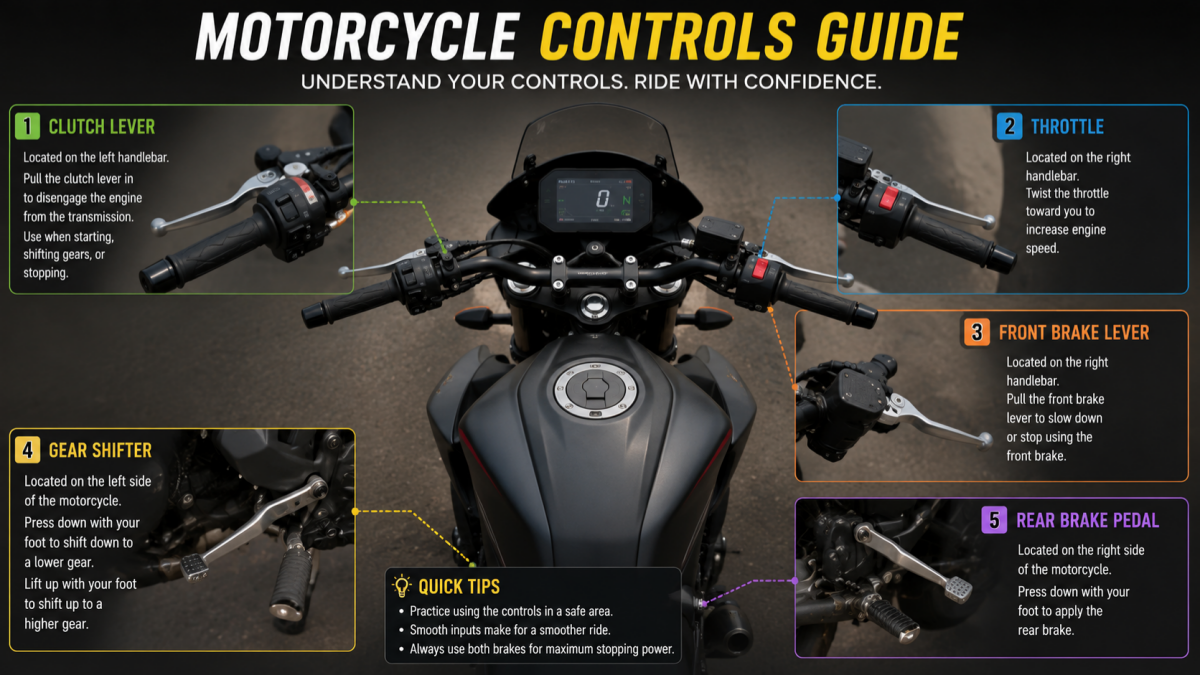
Before starting the engine, beginners should become familiar with every motorcycle control.
Take time to learn:
- Throttle control
- Front brake lever
- Rear brake pedal
- Clutch lever
- Gear shifter
- Turn signals
- Horn
- Engine kill switch
Understanding the function of each control allows you to react naturally when riding.
A good beginner exercise is sitting on the motorcycle while it is turned off and practicing hand and foot movements until they become familiar.
Drill: Sit on the bike with the engine off and practice reaching for each control 10 times in a row without looking down. Do this until it feels unnatural not to know where they are.
🚦 Practice Starting, Stopping, and Shifting
motorcycle-start-stop-shifting-practice
Master the Most Important Motorcycle Controls
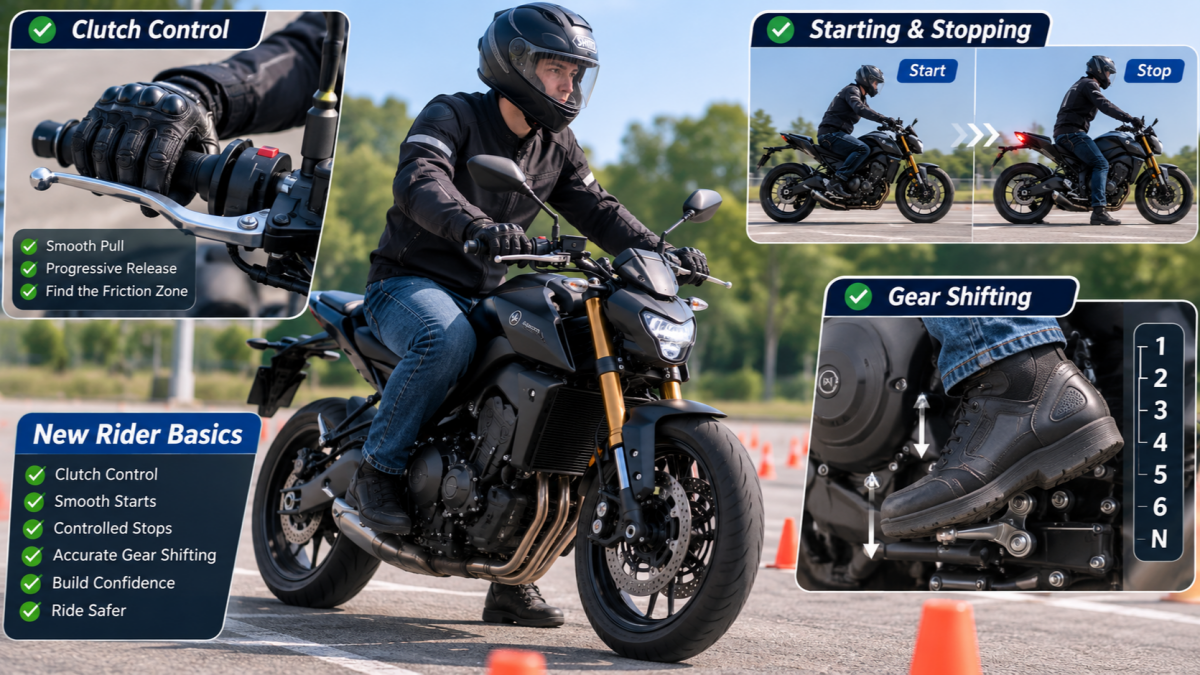
Starting, stopping, and shifting are the foundation of motorcycle riding. Beginners should spend enough time practicing these skills in a safe and open area before riding in traffic.
A smooth rider is not the one who rides the fastest, but the one who can control the motorcycle calmly in different situations.
How to Start a Motorcycle Smoothly
The first challenge for many beginners is learning proper clutch control.
Practice these steps:
- Sit in a balanced riding position and look forward.
- Pull in the clutch completely before selecting first gear.
- Slowly release the clutch until you feel the motorcycle begin moving.
- Add a small amount of throttle while gradually releasing the clutch.
- Keep movements smooth and avoid sudden acceleration.
Finding the motorcycle’s friction zone is one of the most important beginner skills. This is the point where engine power starts transferring to the rear wheel.
Good clutch control helps with slow-speed riding, traffic situations, and smooth starts.
How to Stop Safely
Stopping correctly is just as important as starting.
When approaching a stop:
- Close the throttle smoothly.
- Apply both front and rear brakes gradually.
- Keep the motorcycle upright.
- Pull in the clutch before the engine stalls.
- Place your foot down only after coming to a complete stop.
Many beginners make the mistake of using only one brake or grabbing the front brake suddenly. Learning progressive braking improves stability and control.
How to Shift Gears Correctly
Smooth gear changes make riding more comfortable and improve motorcycle handling.
Basic shifting steps:
- Release the throttle slightly.
- Pull in the clutch lever.
- Move the gear shifter firmly.
- Slowly release the clutch.
- Apply throttle smoothly.
Beginners should practice both upshifting and downshifting.
Downshifting before corners or stops helps maintain control and keeps the motorcycle ready for acceleration.
Remember, smooth operation is more important than speed. Build muscle memory through repetition before increasing riding difficulty.
↩️ Learn Safe Turning Techniques
motorcycle-counter-steering-cornering-technique
Master Vision, Body Position, and Counter Steering
Turning is one of the most important motorcycle riding skills. A motorcycle depends on balance, speed control, and rider input to change direction safely.
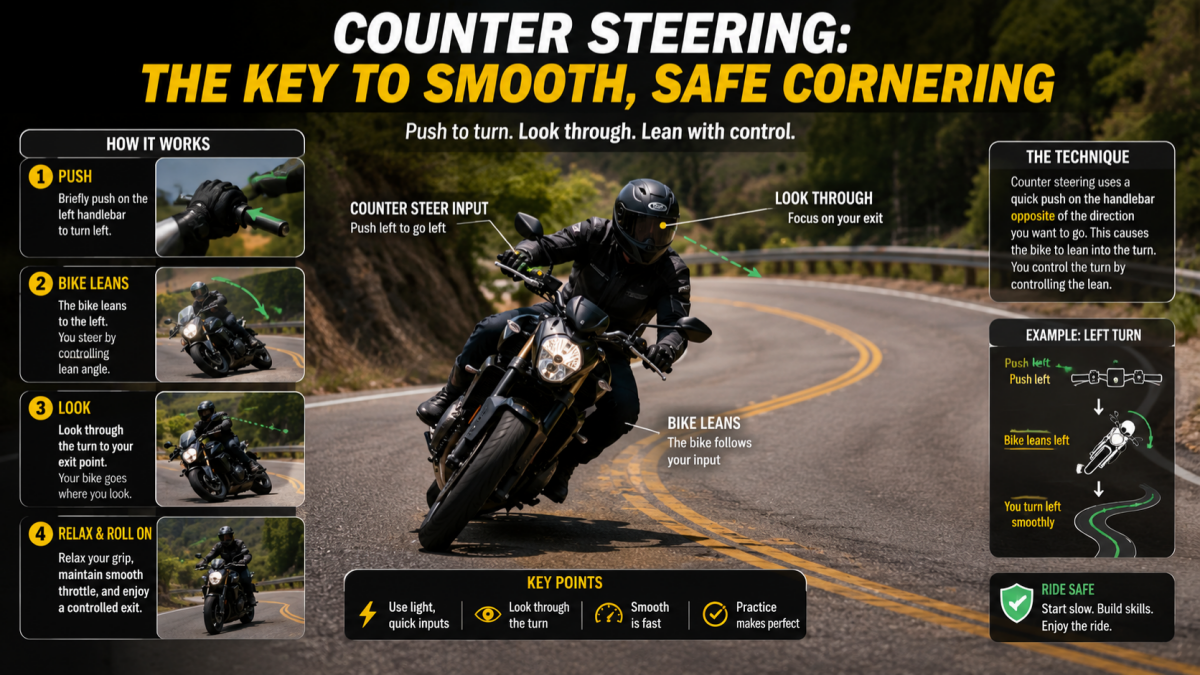
One common beginner mistake is looking directly at obstacles or the edge of the road. Motorcycles naturally follow the direction of your vision, so always look where you want to go.
Understand Counter Steering
At normal riding speeds, motorcycles turn using a technique called counter steering.
Counter steering means:
- To turn left, gently push the left handlebar forward.
- To turn right, gently push the right handlebar forward.
This small handlebar input causes the motorcycle to lean into the desired direction.
Counter steering becomes especially important when riding above slow parking-lot speeds. It allows riders to make smoother turns, avoid obstacles, and adjust their riding line more effectively.
Safe Cornering Tips
Before entering a corner:
- Reduce speed before the turn.
- Look through the corner.
- Keep your arms relaxed.
- Maintain smooth throttle control.
- Avoid sudden braking while leaning.
- Follow a safe riding line.
With regular practice, cornering becomes more natural and improves overall riding confidence.
🛣️ Build Confidence on Real Roads
Start Small and Increase Difficulty Gradually
After mastering basic motorcycle controls, beginners can slowly move from empty parking lots to quiet streets and eventually more challenging roads.
Practice:
- Lane positioning
- Mirror checks
- Shoulder checks
- Following distance
- Defensive riding
- Traffic awareness
Avoid riding in heavy traffic or bad weather until you have enough experience.
Confidence comes from controlled practice, not from riding beyond your ability.
❌ Common Beginner Mistakes to Avoid
Build Better Riding Habits Early
Many new riders develop unsafe habits during their first months. Understanding common mistakes can help beginners improve faster.
| Common Mistake | Why It Happens | How to Improve |
| Looking down while riding | Lack of confidence | Keep your eyes focused ahead |
| Releasing the clutch too quickly | Poor clutch control | Practice the friction zone |
| Braking suddenly in corners | Entering turns too fast | Slow down before turning |
| Riding faster than your skill level | Overconfidence | Increase speed gradually |
| Following vehicles too closely | Poor distance awareness | Maintain safe following distance |
| Forgetting mirror checks | Incomplete riding habits | Check surroundings regularly |
| Holding handlebars too tightly | Nervousness | Relax your arms and shoulders |
| Ignoring weather conditions | Lack of experience | Adjust riding style for conditions |
Developing good habits early creates a stronger foundation for becoming an experienced rider.
🎧 Useful Equipment for Modern Riders
Ride Smarter and Stay Connected
Modern motorcycle technology helps riders improve communication, navigation, and overall riding experience.
🪖 Helmet Communication
A reliable Helmet Communication system allows riders to communicate with passengers or riding partners while keeping their hands focused on riding.
🎵 Bluetooth Intercom
A Bluetooth Intercom provides clear communication between riders, making group rides easier and allowing convenient access to navigation instructions.
📡 Motorcycle Intercom
For motorcycle groups and touring riders, a Motorcycle Intercom helps share road information, weather updates, and important riding communication.
Other useful motorcycle touring equipment includes:
- Navigation devices
- Waterproof riding gear
- Tire repair kits
- Portable chargers
- Emergency supplies
📚 Keep Improving Your Riding Skills
Learning Never Stops
Becoming a better rider requires continuous learning and practice.
Experienced riders continue improving by:
- Taking advanced motorcycle training courses
- Practicing emergency braking
- Improving cornering skills
- Riding in different environments
- Learning from other riders
Every ride is an opportunity to improve your control and awareness.
❓ Frequently Asked Questions
How long does it take to learn motorcycle riding?
Most beginners can learn the basic controls within a few practice sessions, but becoming a confident rider requires regular practice over weeks or months.
Is riding a motorcycle difficult for beginners?
Motorcycle riding requires balance and coordination, but learning step by step makes the process easier and safer.
Should I learn on a small motorcycle?
Yes. Lightweight motorcycles are usually easier to control and are recommended for beginners because they help build confidence.
What is the most important beginner motorcycle skill?
Clutch control, smooth braking, proper vision, and cornering techniques are among the most important skills for new riders.
Can I teach myself to ride a motorcycle?
Self-learning is possible, but professional motorcycle training courses are recommended because instructors can teach proper techniques and help beginners avoid unsafe habits.
What equipment should a beginner motorcycle rider buy first?
A beginner should prioritize safety equipment such as a certified helmet, protective riding gear, gloves, boots, and communication tools. A Helmet Communication, Bluetooth Intercom, or Motorcycle Intercom system can also improve convenience and safety during group rides or longer motorcycle trips.
Learning motorcycle riding is a journey that requires patience, practice, and continuous improvement.
Every experienced rider started with the same basic steps: learning motorcycle controls, practicing safely, and building confidence one ride at a time.
Start with the fundamentals, develop strong riding habits, and continue improving your skills through training and real-world experience.
Ready to start your motorcycle journey? Practice safely, ride responsibly, and explore the open road with confidence.Got questions? Drop them in the comments — we reply to every single one within 24 hours. And if you're looking for gear that won't let you down, browse our curated collection for new riders.
